
November 9, 2026
How to Pack Fragile Items: Dishes, Glassware, Art, and Electronics
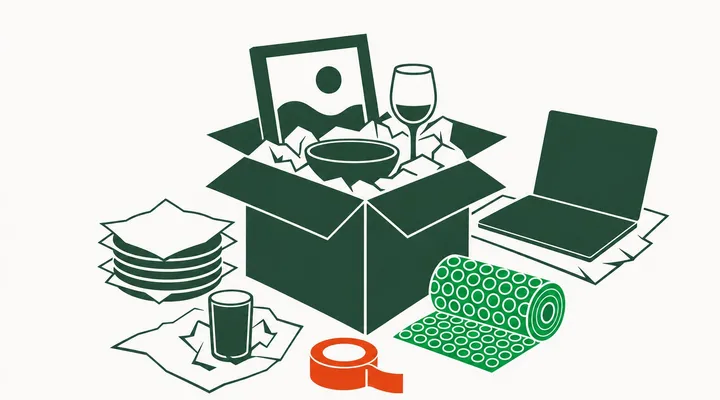
Most things that break in a move don’t break because a box got dropped. They break because they were packed loosely and shifted inside the box. The goal with fragile items is simple: nothing touches anything else, and nothing moves.
The materials that actually matter
You don’t need specialty products for most fragile items. Three things do the job:
- Packing paper for wrapping individual items and filling empty space
- Bubble wrap for the most delicate pieces and anything with a thin edge
- Sturdy boxes in smaller sizes — a small box full of dishes is heavy but manageable, while a large box full of dishes is how boxes get dropped
Newspaper works in a pinch, but the ink transfers onto dishes and has to be washed off at the other end.
Dishes and plates
- Line the bottom of the box with a layer of crumpled paper.
- Wrap each plate individually, then bundle three or four wrapped plates together.
- Stand plates on edge, like records in a crate, rather than stacking them flat. Plates are much stronger edge-on and handle bumps better that way.
- Fill every gap with crumpled paper until nothing shifts when you gently rock the box.
Glasses and stemware
- Stuff the inside of each glass with paper first, then wrap the outside.
- Wine glasses need extra wrap around the stem, which is the weakest point.
- Pack glasses upright, never on their side, and use a box with cardboard dividers if you have one.
- Put the heaviest glassware on the bottom and the lightest on top.
Framed art and mirrors
- Tape a large X across the glass with painter’s tape. It won’t stop a crack, but it keeps shards together if one happens.
- Protect the corners with cardboard corners or folded cardboard.
- Wrap the whole piece in bubble wrap, then in a moving blanket or a flat picture box.
- Always move art and mirrors on edge, never lying flat with something on top.
TVs and electronics
- The original box is the best option if you still have it.
- Otherwise, wrap the screen in a moving blanket or foam and keep it upright. Most flat screens aren’t meant to be transported lying flat.
- Photograph the cable connections before unplugging anything, and put cables and remotes in a labeled bag taped to the back of the device.
- Back up computers before moving day.
Label it so the crew knows
Mark every fragile box on the top and on at least two sides — “FRAGILE” plus the room name and “THIS SIDE UP” where it matters. Once boxes are stacked, the top label is the one nobody can see.
Tip: Before taping a box shut, close the flaps and gently shake it. If you hear or feel anything move, add more paper. That one check prevents most breakage.
If you’d rather not wrap every plate yourself, our packing team can pack just the fragile rooms or the whole house, and we sell boxes, bubble wrap, and packing paper with no minimum order. Get a quote and tell us what you need packed.