October 26, 2026
Choosing a Storage Unit: Size, Climate Control, and Why Access Matters More Than You Think
Storage usually enters the picture because two dates don’t line up. The sale closes before the new place is ready, a lease ends in the middle of a renovation, or a houseful has to go somewhere while a family decides what happens next.
We don’t rent units — we load them and empty them, several times a month, at facilities all over the Eastside and the valley. What follows is what that experience teaches about choosing one, including the thing nobody warns you about: the unit’s access type can cost you more than its monthly rent.
Size: what actually fits
Facility size guides tend to assume everything is boxed and stacked to the ceiling. Almost nobody stores like that. Here’s roughly what we see going in, allowing for the fact that you’ll want to walk in and reach things — and our storage size calculator will do the arithmetic for you:
- 5×5 — Boxes, seasonal decorations, a mattress on its side, a bike, garden tools. No room for a sofa.
- 5×10 — A studio: bed, small sofa, chest of drawers, a TV unit and fifteen-odd boxes.
- 5×15 — A one-bedroom with everything in it: bed, wardrobe, sofa, dining set and the boxes. Long and thin, so plan what goes at the back.
- 10×10 — The common choice. A large one-bedroom, or a two-bedroom without much in the second room. Appliances fit along one wall.
- 10×15 — A two-bedroom house with the appliances, or a smaller one plus a garage — mower, tools, patio furniture.
- 10×20 — A three-bedroom house comfortably, or a four-bedroom packed tight, with an aisle down the middle so you can still reach the back.
- 10×30 — A four to five-bedroom house, or a house plus a workshop. Not every facility has them.
Two things worth knowing before you choose.
Measure the three biggest items, not the house. A sectional sofa, a king mattress and a wardrobe decide the size far more than how many boxes you have. Boxes fill gaps; furniture doesn’t.
If you’re between two sizes, take the bigger one. The difference is usually $20 to $40 a month. Having to stop mid-load and rent a second unit, or send a crew back another day because it didn’t fit, costs considerably more than that.
Climate control: a damp question, not a hot one
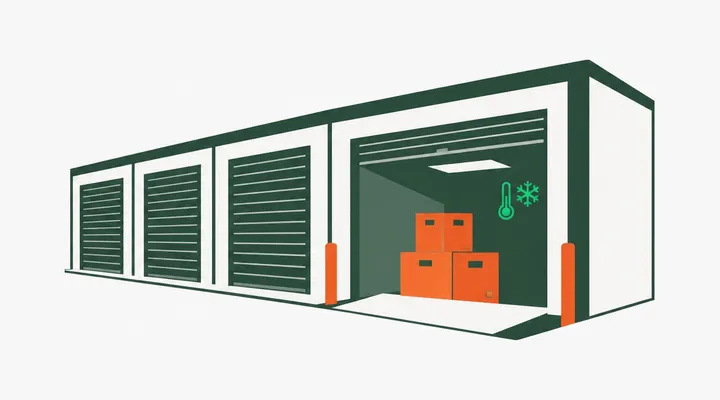
In most of the country, climate control is sold on summer heat. Here it isn’t about heat at all. It’s about damp — eight months of it, and the condensation that comes with a cold unit on a wet week.
Worth paying for if things are going in for more than a month or two and include wood furniture, upholstery, mattresses, electronics, paper, photographs, artwork, leather, or anything with a motor. Those are the things that come out of a non-climate unit smelling of mildew in spring.
Not worth paying for if you’re storing garden tools, plastic bins, metal shelving, car parts, building materials, or anything already destined for a garage.
Somewhere in the middle: four to six weeks between houses, in winter, with ordinary household furniture. Plenty of people do that in a standard unit and it’s fine. If you do, lift everything off the concrete — pallets, boards, even a layer of boxes — leave a hand’s width between your things and the walls, and don’t seal upholstery in plastic, which traps moisture rather than keeping it out.
Ask the facility whether “climate controlled” at their site means heated and cooled, or only heated. The two are priced alike and are not the same thing.
Drive-up or indoor with a lift
This is the choice that affects what the move costs, and it’s the one people make last, usually on price.
Drive-up means the truck backs up to a roller door and the carry is a few feet. It’s the fastest unit there is to fill.
Indoor with a lift means a longer walk: through a loading bay, down a corridor, through fire doors, into a lift shared with every other tenant, then another corridor. Each item makes that trip. With a trolley you move four or five boxes at a time instead of carrying one.
From our own jobs, the same quantity of furniture typically takes an hour or two longer going into an upper-floor unit than into a drive-up one — and longer still on a weekend at the end of the month, when one lift serves several families all moving at once. Local work is hourly, so that time is real money, and it usually outweighs the few dollars a month a drive-up unit costs extra.
A ground-floor indoor unit sits between the two: protected from the weather, no lift, but still a corridor to walk.
One more thing worth asking, because facilities never volunteer it: which unit, specifically. A 10×10 beside the loading bay and a 10×10 at the far end of the second floor cost the same and are not the same job. Ask how far the unit is from the door or the lift, and ask for a closer one.
Questions to ask before you sign
- What are the access hours? Not the office hours — the gate hours. If the gate locks at 6 PM and your load runs long, the rest comes back on the truck.
- Is the lift or loading bay booked, or first come first served? On a Saturday at month’s end, this matters.
- How wide are the corridors and the unit door? Relevant if you have a long sofa or a tall wardrobe.
- Do they require insurance? Many facilities do, and sell their own. Check whether your renters’ or homeowners’ policy already covers stored goods.
- Are trolleys provided, and how many? Three families sharing two trolleys is a slow morning.
- What’s the move-out notice? Some want two weeks’ notice to stop billing, which catches people out when the new place is finally ready.
Packing a unit so you can use it
A storage unit you can’t walk into is just an expensive pile.
- Leave an aisle down the middle, even if it means a bigger unit.
- Heavy and sturdy at the bottom, light and fragile on top. Boxes of books and tools at floor level.
- Label boxes on the side facing the aisle, not the top.
- Put what you’ll need first — tools, kitchen basics, the kettle, a change of clothes — nearest the door.
- Dismantle bed frames and tables, and tape the hardware to the underside of the piece it belongs to.
- Take a photo of the unit when it’s full. It’s the fastest way to remember what’s in there in three months.
Getting things in and out
Loading and unloading a unit is labor only work: no truck of ours needed if you’ve rented one, or we bring ours if you haven’t. The hourly rates and what the minimum covers are on the moving cost guide — and the honest advice is to tell us the access type and the unit number when you book, because a drive-up unit and a second-floor unit need different amounts of time and sometimes different crew sizes.
If the plan is house to storage now and storage to the new place later, say that up front. Two bookings made together get scheduled better than two bookings made two months apart, and what goes into the unit last should be what comes out of it first.
Call 425-495-7762 with the facility and the unit, and we’ll tell you how long it should take.